

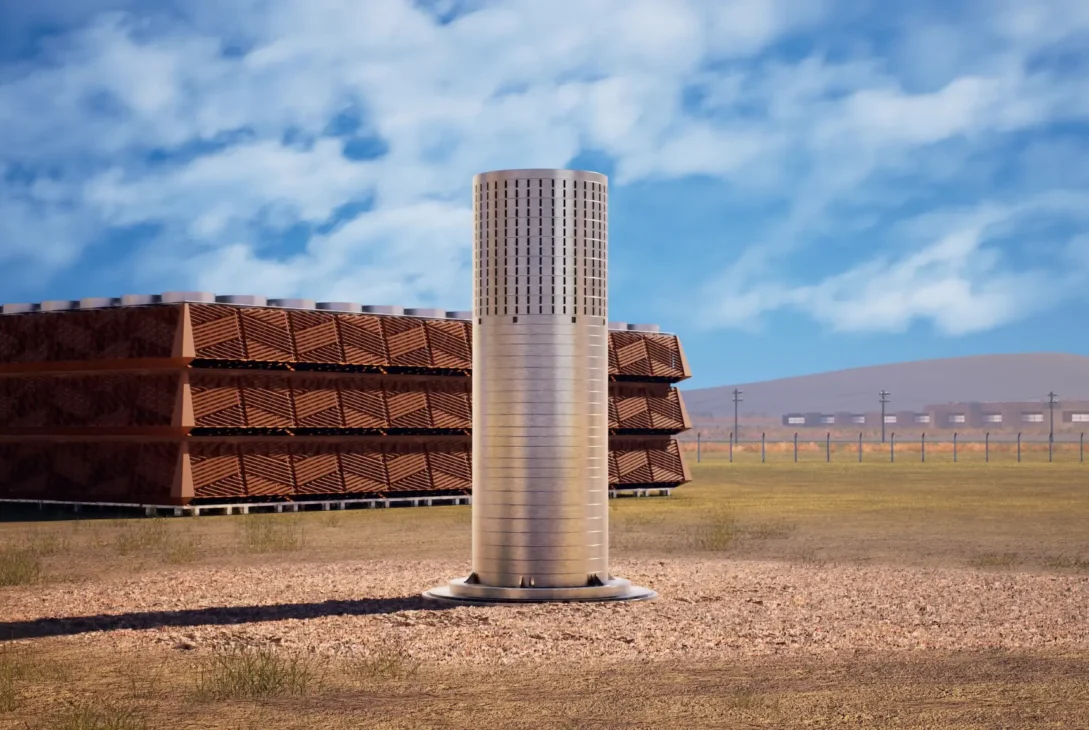
Momentum is returning to nuclear energy startups. Last Energy has completed a $100 million Series C funding round to accelerate development of its steel-encased micro nuclear reactors, built using a small modular reactor (SMR) approach.
The round was led by Astera Institute, with participation from AE Ventures, Galaxy Fund, Gigafund, JAM Fund, The Haskell Company, Ultranative, Woori Technology, and other investors.
What Does Last Energy Build?
Last Energy develops factory-manufactured micro nuclear reactors designed for rapid deployment and scalability.
Key specifications:
- 20 MW electrical output per reactor
- Enough power for approximately 15,000 households
- Designed for serial production, not bespoke construction
- Target markets include data centers, industrial sites, and local grids
The company’s core mission is to make nuclear power cheaper, faster to deploy, and easier to scale.
The Differentiation: Steel-Sealed, Service-Free Nuclear Design
Unlike many next-generation nuclear startups, Last Energy is not inventing an entirely new reactor physics model.
Instead, the company:
- Modernizes a proven pressurized water reactor (PWR) design originally developed by the U.S. government decades ago
- Permanently seals the reactor core inside ~1,000 tons of steel
- Eliminates the need for on-site servicing
At the end of its lifecycle, the same steel structure remains in place as waste containment, simplifying decommissioning.
This approach offers several structural advantages:
- Removes the need for nuclear-grade concrete
- Simplifies radioactive waste handling and transport
- Has the potential to accelerate licensing and regulatory approval
- Reduces construction risk and cost overruns
Roadmap and Timeline
Last Energy has outlined a clear, staged deployment plan:
- 5 MW pilot reactor under construction at a site leased from Texas A&M University
- Pilot expected to go online in 2026
- 20 MW commercial reactor planned for deployment by 2028
If successful, this would position Last Energy among the first SMR startups to move beyond demonstrations into commercial production.
Why Nuclear, Why Now?
Several macro trends are driving renewed investor interest in nuclear:
- Explosive growth in AI-driven data centers
- Demand for carbon-free, 24/7 baseload power
- Grid instability and limitations of intermittent renewables
Recent funding rounds underscore the shift:
- X-Energy (backed by Google): $700M
- Antares: $96M
- Aalo Atomics: $100M
Investors are increasingly viewing nuclear not as a legacy technology, but as critical infrastructure for the AI era.
FounderN Global Commentary
Last Energy is making a bold but coherent bet:
turn nuclear power from megaprojects into an industrial product.
Most nuclear failures of the past were not technological—they were project-management disasters: custom builds, regulatory sprawl, and decade-long timelines.
Last Energy’s insight is simple and powerful:
- Use already-proven reactor designs
- Lock down risk with steel, not complexity
- Treat reactors like manufactured units, not monuments
The quote that matters most:
“We’re not thinking about one or two reactors — we’re thinking about tens of thousands.”
That mindset aligns perfectly with the AI energy bottleneck reality.
If compute is scaling exponentially, energy must become modular, predictable, and repeatable.
In that context, nuclear isn’t optional — it’s inevitable.
Frequently Asked Questions (FAQ)
How much funding did Last Energy raise?
$100 million in a Series C round.
Who led the investment?
Astera Institute.
What does Last Energy build?
Steel-encased micro nuclear reactors using a small modular reactor (SMR) approach.
How powerful is one reactor?
20 MW, enough to power roughly 15,000 homes.
What makes their design different?
A permanently sealed steel containment that requires no servicing and simplifies waste handling.
Is this a new reactor design?
No. It is a modernized version of a proven pressurized water reactor (PWR).
When will the first reactor go live?
A 5 MW pilot is planned for activation in 2026.
Why are investors backing nuclear now?
Because AI, data centers, and decarbonization require continuous, carbon-free power.
Follow FounderN Global on Instagram!
Mükellef Teknoloji announced its new investment