

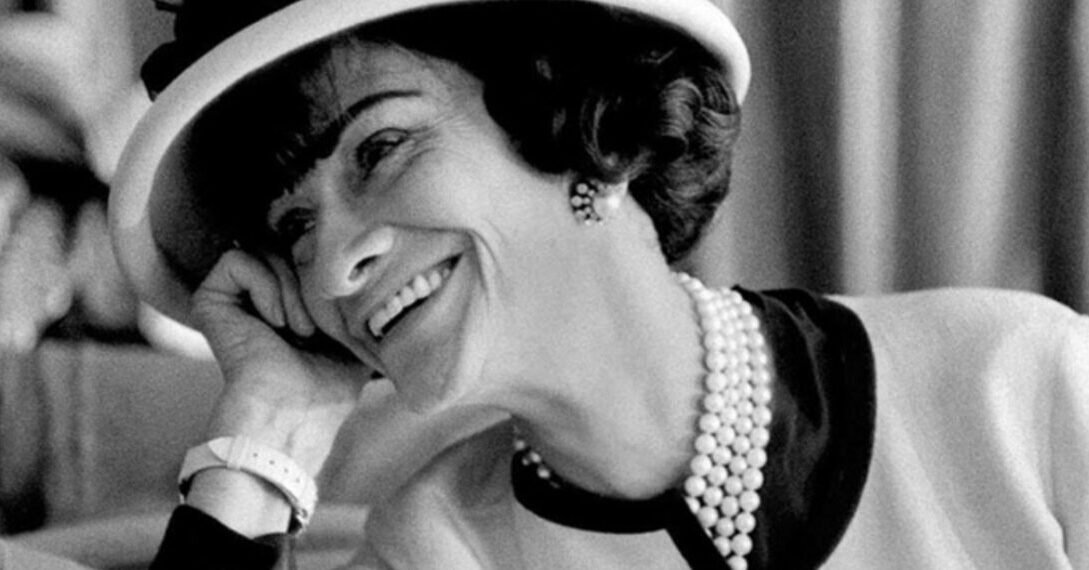
Coco Chanel was far more than a designer who shaped the history of fashion; she was a revolutionary figure who fundamentally altered the relationship women had with their bodies, their societal roles, and their independence. Her story proves that true elegance isn’t about excessive ornamentation—it’s about the power of simplicity and the courage to break the rules.
The Orphanage Roots: From Aubazine to the Atelier
Born Gabrielle Bonheur Chanel in 1883, her early life was defined by hardship rather than glamour. After losing her mother at a young age, she was raised in a convent-run orphanage in Aubazine. This period left a permanent mark on her soul. The disciplined environment, the stark monochrome habits of the nuns, and the absence of clutter birthed the minimalist aesthetic that she would later gift to the world. Her preference for black and white wasn’t just a trend; it was an instinctual choice rooted in her past.
The nickname “Coco” emerged during her short-lived stint as a café singer. While she didn’t find her calling on stage, she discovered what she didn’t want: a life dictated by others. In an era where women were expected to marry for status, Coco Chanel chose to build her own identity, becoming a pioneer of self-made success.
Liberating the Female Silhouette: Comfort as Luxury
In the early 20th century, women’s fashion was a prison of corsets, heavy underskirts, and restrictive layers. Coco Chanel looked at these designs and realized they were incompatible with modern life. Her philosophy was simple yet radical: “Luxury must be comfortable, otherwise it is not luxury.”
- Fabric Rebellion: She famously turned jersey fabric—previously reserved for men’s underwear—into chic, flowing attire.
- The Power of Trousers: By introducing trousers for women, she didn’t just offer a new garment; she offered a new way to move through the world.
- Minimalist Aesthetic: Her focus was on the cut rather than the decoration, allowing the woman herself to be the focus, not the dress.
The Legacy of Timeless Icons
Coco Chanel was obsessed with the concept of “timelessness.” She knew that trends would fade, but style was eternal.
1. The Little Black Dress (LBD)
In 1926, the Little Black Dress made its debut. Vogue dubbed it the “Ford of Fashion” because it was simple, accessible, and universal. Before Chanel, black was the color of mourning; after her, it became the ultimate symbol of sophisticated chic.
2. Chanel No. 5: The Scent of an Era
While other perfumes of the time mimicked single flowers, she wanted something abstract—”a woman’s perfume, with the scent of a woman.” Launched in 1921, Chanel No. 5 became the first fragrance to carry a designer’s name and remains a cultural icon of mystery and strength.
A Complex Icon: Contradictions and Humanity
Coco Chanel was not a flawless figure. Her political stances, wartime associations, and personal choices remain subjects of critical debate today. However, her humanity lies in these contradictions. Her journey shows that being an “icon” is rarely a smooth path; it is often a series of defiant choices made against the grain.
Conclusion: The Mental Space of Chanel
Today, the name Coco Chanel may be synonymous with luxury goods, but her true legacy is the mental space she opened for women. She demonstrated that it is possible to be comfortable, to be simple, and to question established norms without losing one’s essence.
Her story isn’t just about fashion; it’s about life. It’s a reminder that the most profound revolutions don’t always happen with a shout; sometimes, they happen through the quiet power of simplification. Chanel taught us that by stripping away the unnecessary—the literal and metaphorical corsets of society—we find the freedom to perform at our best. In a world that constantly demands more noise and more “decoration,” her philosophy of functional elegance stands as a strategic blueprint for the modern professional.
Chanel’s journey from a silent orphanage to a global empire proves that identity is not something you are born with, but something you curate. She didn’t just change what women wore; she changed how they saw themselves—as active participants in life rather than passive ornaments. This legacy challenges us to look at our own lives and careers: Are we following the “corsets” of our industry, or are we brave enough to introduce a “jersey fabric” moment that prioritizes efficiency and authenticity?
Her influence suggests that the ultimate luxury is not an expensive bag, but time, movement, and the courage to be oneself. As we navigate the complexities of the 21st century, the Chanel ethos reminds us that to lead is to simplify.
Where will your personal revolution begin? Will you choose to blend in with the transient trends of today, or will you build something that remains timeless